
Metal and Glass Welding
In people’s traditional perception, metals are hard and conductive, while glass is transparent and insulating. These two materials with vastly different properties seem difficult to firmly bond together. The traditional welding method relies on high-temperature melting to connect metals of the same or similar properties, but this is obviously not suitable for glass with high melting points and easy cracking when heated. However, with the development of modern precision manufacturing, especially in fields such as electronic packaging, medical devices, and optical components, achieving reliable connections between metal and glass has become an urgent need. A technique called ultrasonic soldering provides a clever solution for this.
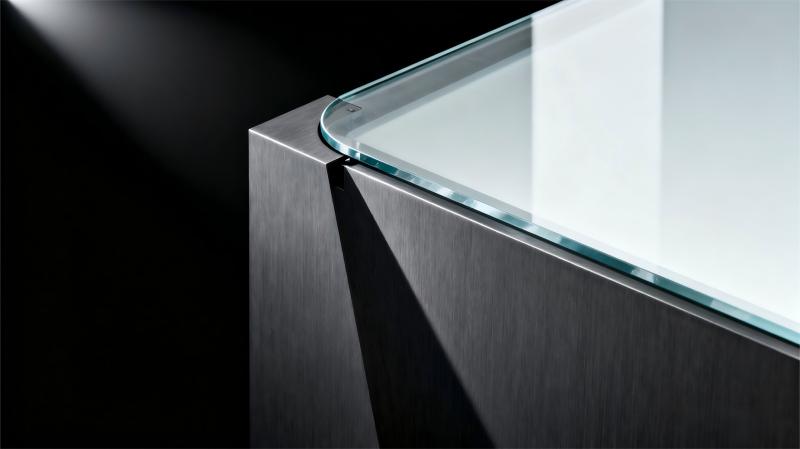
Why is it so difficult to connect metal and glass?
To achieve the combination of the two, there are two main challenges:
1. Wettability issue: The glass surface is very smooth and chemically stable, and ordinary liquid solder cannot be spread out (i.e. wetted) like on a metal surface. It is like water droplets on a lotus leaf, gathering into a spherical shape and unable to form effective connections.
2. Thermal stress problem: There is a huge difference in the coefficient of thermal expansion between metal and glass. When the temperature changes, the degree of contraction and expansion of metals is much greater than that of glass, and this mismatch can generate huge stress at the interface, which can easily lead to glass cracking or detachment at the connection.
How to solve the problem of ultrasonic soldering?
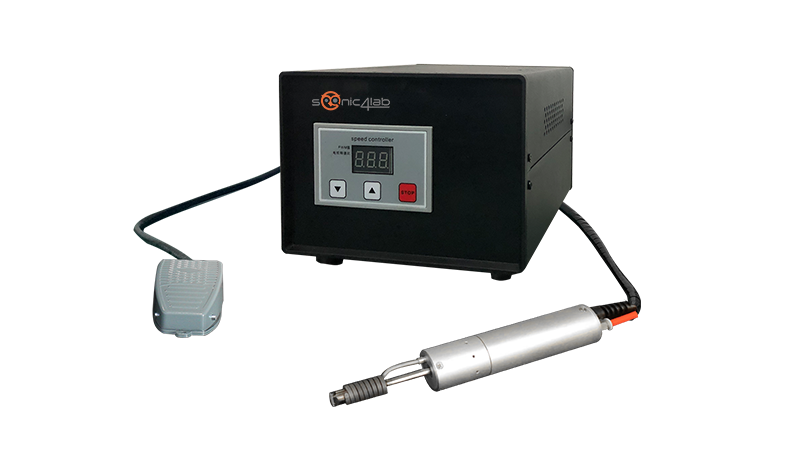
The core weapon of ultrasonic soldering machine is not heat, but “sound”. The process can be briefly summarized as the following steps:
1. Preheating and tinning: Firstly, the metal and glass parts are preheated using a precisely controlled heating table to reach a relatively stable and suitable temperature for soldering (usually much lower than the softening point of the glass). Subsequently, place the solid solder wire at the junction of the metal and glass to be connected.
2. Introducing ultrasonic energy: When the solder is heated and melted, forming a liquid solder ball, the soldering head of the ultrasonic soldering machine will come into contact with the melted solder and transmit high-frequency ultrasonic vibrations (usually above 20kHz) into it.
3. Key cavitation and friction effects: The propagation of ultrasonic waves in liquid solder produces a powerful “cavitation effect” – tiny bubbles in the liquid instantly form and violently rupture, generating extremely high local pressure and micro jets. Meanwhile, intense ultrasonic vibrations also generate strong frictional forces at the interface.
*For glass: This cavitation impact and friction can effectively remove extremely small amounts of pollution and adsorption layers on the glass surface, instantly exposing fresh glass layers with higher surface activity. This enables liquid solder to successfully ‘wet’ the glass surface for the first time.
*For metals: Similarly, ultrasound can thoroughly remove the oxide film on the metal surface, ensuring a perfect bond between solder and metal.
4. Formation of metallurgical mechanical composite connection: Under the action of ultrasound, solder simultaneously interacts with clean metal surfaces and activated glass surfaces. The final connection formed is not only the metallurgical bonding between solder and metal, but also a strong micro mechanical fit and physical adsorption between solder and glass, thus building a sturdy “sonic bridge”.
Technical advantages and characteristics
*Low temperature connection: The entire process is completed at a relatively low temperature (determined by the melting point of the solder, such as commonly used tin based solder at 200-300 ℃), greatly reducing the risk of glass breakage caused by thermal expansion mismatch.
*No need for additional flux: The cleaning effect of ultrasonic waves replaces the essential chemical flux in traditional soldering, avoiding the corrosion and contamination of glass transparency or precision components caused by flux residue, and making the connection points cleaner and more reliable.
*Environmentally friendly and efficient: Due to the absence of chemical flux, there is no harmful gas volatilization during the production process, making it more environmentally friendly. Meanwhile, the welding process is rapid and usually can be completed within seconds.
*High strength and good sealing: The formed connection points have good mechanical strength and vacuum tightness, which can meet the demanding requirements of high-end devices.
In summary, ultrasonic soldering technology cleverly utilizes high-frequency sound wave energy, breaking through the boundaries of materials science and providing an efficient, clean, and reliable connection solution for metals and glass, two materials with distinct “personalities”. It continues to drive innovation and development of cutting-edge technological products.
If you want to purchase equipment, please click here
