
Ultrasonic Soldering Solution for LCD Modules
Ultrasonic Soldering Solution for LCD Modules – Sonic4Lab
FFC ribbon cable, also known as flexible flat cable, allows for flexible selection of wire quantity and spacing, making wiring more convenient. It can significantly reduce the volume of electronic products, lower production costs, and improve production efficiency. It is very suitable for use as a data transmission cable between mobile parts and motherboards, PCB boards and PCBs, and in miniaturized electrical equipment. Common specifications include flexible cables with various spacing such as 0.5mm, 0.8mm, 1.0mm, 1.25mm, 1.27mm, 1.5mm, 2.0mm, 2.54mm, etc. This article mainly introduces the welding methods of FFC and FPC cables and the application scheme of ultrasonic automatic soldering.
FPC wiring welding scheme
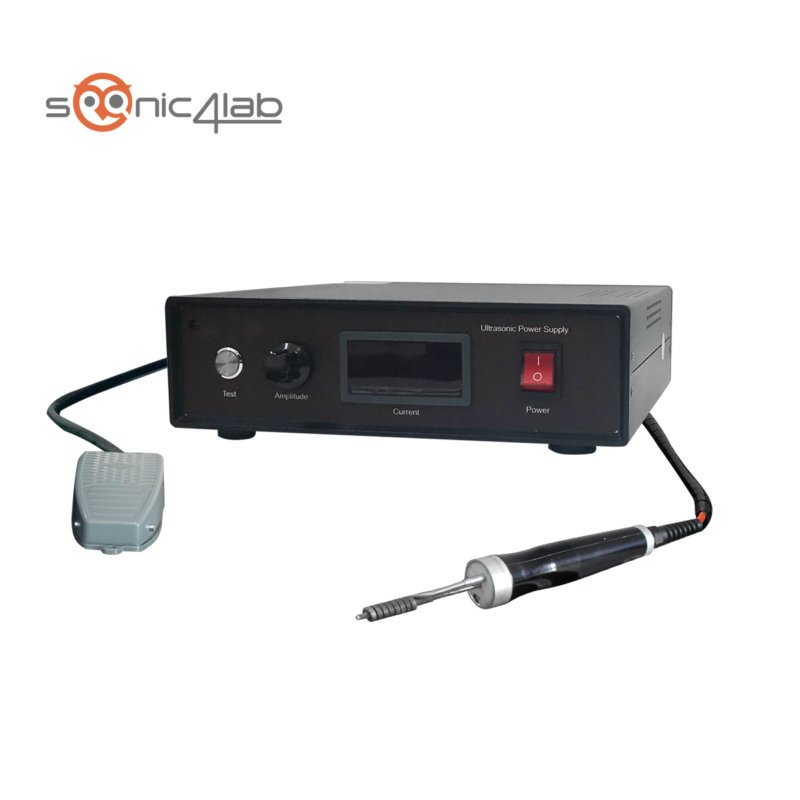
Continuous automatic ultrasonic soldering machine
This machine is widely applicable in various industries and can meet the development needs of multiple industries. The main function is to solder FPC, FFC, and various flexible ribbon cables, as well as various terminal ribbon cables. This equipment is a double Y reciprocating welding machine that can be used alternately with two fixtures at the same time, saving half of the time and improving work efficiency.
The output of this machine is stable and adjustable, consisting of ultrasonic soldering system, temperature feedback control system, etc., with precise adjustment and digital display. The temperature and time parameters are input through professional welding software on the operation panel, with a temperature setting range of 0-500 degrees and a time setting range of 0-99 seconds. These are the three key elements of welding products.
Product welding characteristics
A、 Welding advantages:
Welding is firm and efficient. Depending on the product size, multiple pieces can be welded simultaneously, and each welding time is 3 to 5 seconds.
B、 Welding precautions:
The solder pad needs to be filled with sufficient amount of tin, and the amount of tin does not need to be too thick. Generally, the thickness of tin for non windowed FPC is about 0.1, and the thickness of tin for windowed FPC is about 0.2-0.3. If there is FPC with via holes, the amount of tin is between the first two. Of course, the final effect still needs to be adjusted according to the on-site situation.
Instructions:
When soldering FPC, the first step is to align the FPC pads with the PCB pads to ensure a secure soldering; A small amount of tin material needs to be applied on the welding inventory for subsequent welding. If the amount of tin is insufficient, it will lead to poor welding; If the amount of tin is too large, tin overflow may occur, making the solder joint unsightly. Therefore, controlling the amount of solder on the solder pad is the primary focus of the soldering process.
If through-hole technology can be used on FPC pads, subsequent soldering will be smoother and it will be easier to ensure firm soldering. Insert the fixture into the product, support the welding surface flat, and achieve double-sided welding by rotating.
If you want to purchase equipment, please click here.

