
Ultrasonic Tin Dipping Equipment
Ultrasonic Tin Dipping Equipment: Principles, Advantages, and Applications
In the fields of metal joining and surface treatment in industries such as electronics manufacturing and new energy, ultrasonic tin dipping equipment, with its high efficiency, environmental friendliness, and high quality, is gradually replacing traditional tin dipping processes and has become one of the key processing equipment. This equipment, through the synergistic effect of ultrasonic energy and hot-dip tinning technology, solves problems such as welding difficult-to-solder materials and unstable welding quality that are difficult to overcome with traditional processes, providing technical support for high-precision and high-reliability production requirements.
The core working principle of ultrasonic tin dipping equipment is based on the ultrasonic cavitation effect. During operation, the ultrasonic generator produces high-frequency vibration signals, which are converted into mechanical vibrations by the transducer and transmitted to the molten tin. The vibration energy causes a large number of tiny bubbles to be generated inside the molten tin. These bubbles are rapidly generated, expanded, and burst under high-frequency vibration, forming strong micro-jet streams and shock waves. This cavitation effect can efficiently peel off the oxide layer and impurities on the surface of the workpiece, while simultaneously disrupting the surface tension of the molten tin, allowing the liquid tin to quickly and uniformly wet the surface of the workpiece, forming a strong metal bonding layer. Throughout the process, heat melts the solder, while ultrasonic vibration cleans the surface and promotes wetting; the two work together to achieve high-quality soldering.
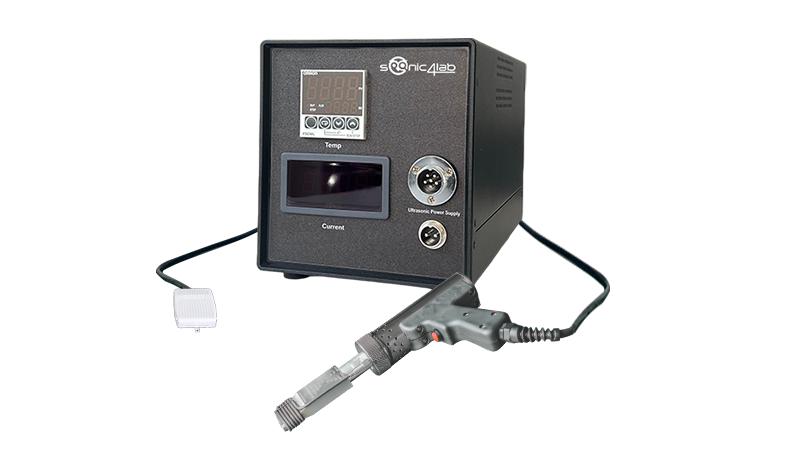
Compared to traditional soldering equipment, ultrasonic soldering equipment has significant advantages. Firstly, it is environmentally friendly. Traditional soldering relies on flux to remove the oxide layer, which easily generates harmful gases and industrial wastewater, requiring additional cleaning steps. Ultrasonic soldering, however, achieves fluxless welding through cavitation, eliminating chemical pollution at the source, simplifying the production process, avoiding corrosion problems caused by flux residue, and improving the durability of the weld joint. Secondly, it produces superior welding quality. Cavitation effectively removes air bubbles and impurities from the welding interface, resulting in a uniform, gap-free solder layer and a strong, reliable weld joint, even meeting the airtight sealing requirements in high-vacuum environments. Thirdly, it has a wide range of applications. This equipment can perform soldering treatment on materials that are difficult to weld using traditional processes, such as aluminum, stainless steel, ceramics, and glass. It also supports the joining of dissimilar materials such as copper-aluminum and glass-metal, providing possibilities for the development of new materials and products. Fourth, it offers superior cost control. Eliminating the need for flux and subsequent cleaning equipment reduces material consumption and equipment investment; it supports aluminum wire as a substitute for copper wire, lowering material costs by up to 80% and significantly improving production efficiency.
Based on these advantages, ultrasonic tinning equipment is widely used in various industries. In the electronics industry, it is mainly used for processes such as enameled wire tinning, PCB board lead tinning, and semiconductor device packaging, ensuring the connection reliability and electrical performance of electronic components. In the new energy field, it can achieve high-precision tinning of battery tabs and photovoltaic module leads, improving the safety and stability of energy storage devices. The automotive manufacturing industry uses it to process engine wiring harnesses, sensor pins, and other components, adapting to the stringent requirements of high temperatures and vibrations in automotive operating conditions. Furthermore, in high-end manufacturing fields such as aerospace and optical instruments, this equipment can meet the high-reliability welding requirements of precision parts, such as the metallization of optical glass and the connection of superconducting materials.
To ensure stable operation and safe operation, standardized operating and maintenance procedures must be followed. Before operation, the equipment should be placed in a stable, flat, dry, and well-ventilated environment, away from vibration sources and flammable or explosive materials. Check that the power supply is properly grounded and that the soldering head is clean and free of residue. During operation, the ultrasonic power, frequency, solder bath temperature, and immersion time should be set appropriately according to the material and size of the workpiece to avoid damage or reduced soldering quality due to improper parameters. Regular equipment maintenance is necessary, including cleaning the soldering head and solder bath residue, checking the wear of easily damaged parts such as transducers, troubleshooting loose or damaged electrical wiring, and promptly replacing any faulty components to extend equipment lifespan and ensure safe operation.
As the manufacturing industry moves towards high precision and green manufacturing, the technological advantages of ultrasonic immersion soldering equipment are becoming increasingly prominent. Through innovative process principles, it solves many pain points of traditional immersion soldering processes, improving product quality while achieving a dual improvement in environmental protection and efficiency. In the future, with the integration of technologies such as automated control and intelligent parameter adjustment, this equipment will further adapt to the needs of large-scale and refined production, providing stronger support for the transformation and upgrading of the manufacturing industry.
If you want to purchase equipment, please click here.

