
Low-Temperature Interconnect Heterogeneous Integration
Low-Temperature Interconnect Heterogeneous Integration
As semiconductor technology evolves towards exceeding Moore’s Law, heterogeneous integration has become a core path to overcome performance bottlenecks. This technology, which integrates chips and components of different materials and process nodes into a single package, can fully leverage the advantages of each material, achieving a leap in system performance and widely adapting to the complex needs of high-performance computing, optical communication, and the Internet of Things. However, the inherent differences in the coefficients of thermal expansion between different materials have become a key bottleneck restricting the reliability of heterogeneous integration.
The core challenge of heterogeneous integration lies in the interconnect compatibility across material systems. The thermal stability of silicon-based chips complements the excellent optoelectronic properties of compound semiconductors and the precision characteristics of MEMS components. However, differences in material properties can cause stress concentration during temperature changes, leading to interface delamination and signal attenuation, or even damage to heat-sensitive components, directly affecting device lifespan. While traditional high-temperature interconnect processes can achieve stable connections, they exacerbate this thermal stress contradiction, hindering the large-scale application of heterogeneous integration.
The emergence of ultrasonic welding technology provides an ideal low-temperature interconnect solution for heterogeneous integration. The core principle of ultrasonic welding is to transfer energy through high-frequency mechanical vibration, causing metal atoms at the interconnect interface to diffuse and fuse at low temperatures, forming a strong metallurgical bond. This process requires no high-temperature heating, effectively avoiding stress problems caused by mismatched thermal expansion coefficients. Compared to traditional high-temperature bonding processes, ultrasonic welding can control the interconnect temperature within the tolerance range of heat-sensitive components, maximizing the protection of precision structures from damage.
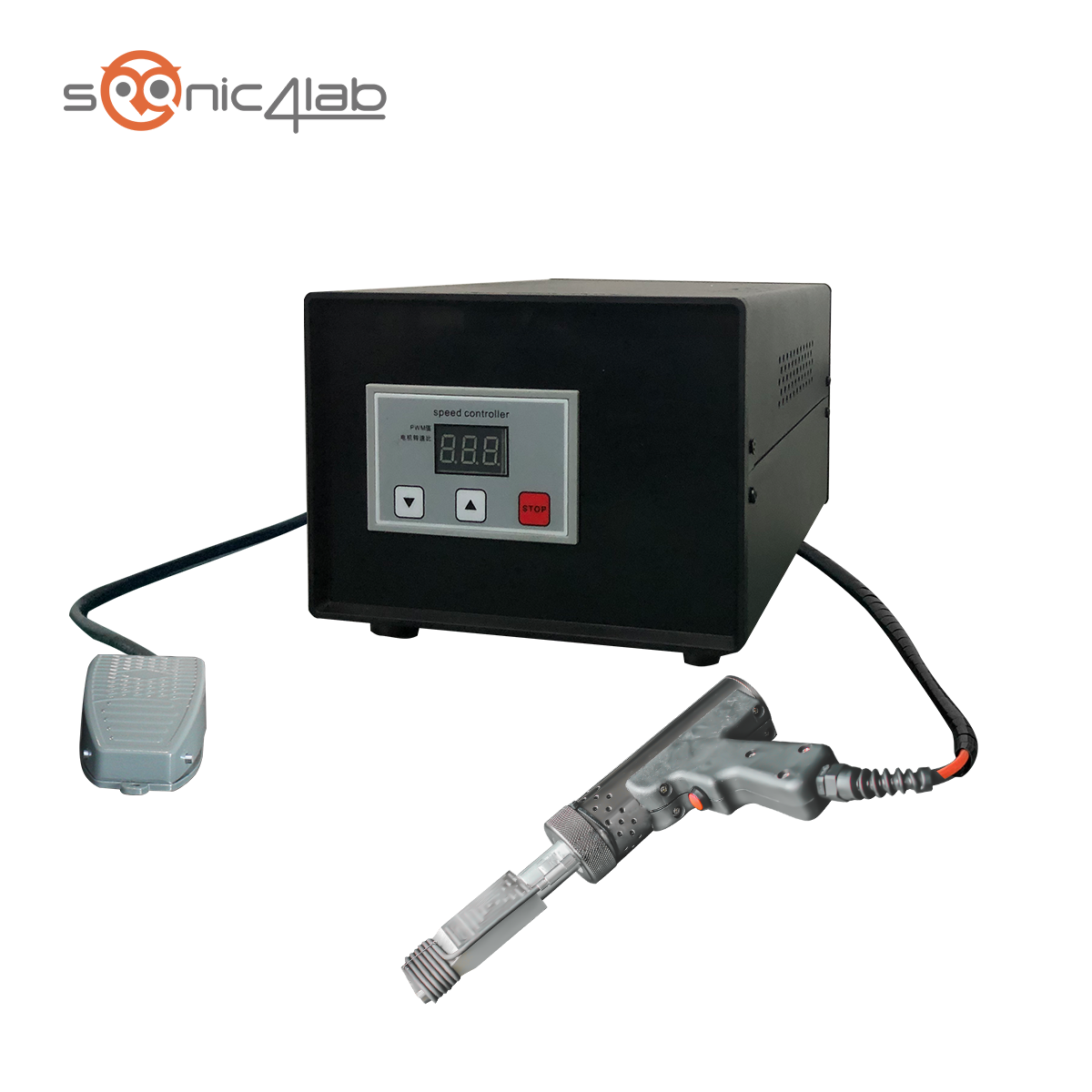
In practical applications, the low-temperature characteristics of ultrasonic welding demonstrate significant advantages. In the field of optoelectronic heterogeneous integration, when integrating lithium niobate thin films with silicon-based wafers, ultrasonic welding avoids high-temperature-induced film performance degradation while reducing interface stress, ensuring the high-speed transmission performance of electro-optic modulators. In multi-chip module integration, this technology enables high-density interconnection for logic chips and memory chips at different process nodes, shortening signal transmission paths, reducing power consumption, and maintaining the original performance of each chip through low-temperature processing.
As a key supporting technology for heterogeneous integration, ultrasonic welding not only solves the reliability problem of cross-material interconnection but also possesses advantages such as high process efficiency, low interconnect resistance, and strong compatibility, adapting to diverse integration needs from micron-level chips to passive components. As integration density continues to increase, the requirements for interconnect precision and stability are constantly escalating. Ultrasonic welding technology is achieving finer-pitch, higher-strength low-temperature interconnects through process optimization, helping heterogeneous integration break through towards three-dimensional stacking and multi-functional fusion.
The maturity of low-temperature interconnect technology has injected new vitality into heterogeneous integration. Ultrasonic welding, with its unique low-temperature advantage, has solved the core contradiction of cross-material integration, promoting the large-scale application of high-performance, high-reliability heterogeneous integrated devices and opening up broad space for innovative development in the semiconductor industry.
If you want to purchase equipment, please click here.
