
Welding the core of the sensor assembly
Welding the core of the sensor assembly-Welding sensor-Sonic4lab
In the field of electronic soldering, the performance of the soldering iron directly determines the quality of the soldering. The sensor component, as the “perception center” of the soldering iron, silently undertakes the key responsibilities of temperature monitoring and signal feedback, and is the core support for achieving precise temperature control and efficient soldering. Compared with the traditional non-temperature-controlled soldering irons that blindly heat up, the soldering irons equipped with high-quality sensor components can achieve more precise temperature control and a more stable soldering process, and are widely used in various scenarios such as electronic production, equipment maintenance, and precision manufacturing.
The sensor component of the soldering iron is mainly composed of a temperature measurement element, a signal transmission module, and a feedback regulation unit. These three components work together to form a complete temperature control loop. Among them, the temperature measurement element is the core component. There are two common types: thermistors and thermocouples. They adapt to different specifications of soldering irons respectively based on their unique characteristics. Thermistors use the characteristic that the resistance value decreases exponentially with temperature increase, and convert the temperature change into a voltage signal through a voltage divider circuit. They respond quickly and have a moderate cost, and are mostly used in small-sized constant-temperature soldering irons. Thermocouples, based on the Seebeck effect, generate micro-volt-level temperature difference electromotive force when the soldering iron head is heated, and the signal is processed by an amplification circuit to achieve temperature detection. They have a wide temperature range and high accuracy, and are often used in industrial-grade high-precision soldering stations.
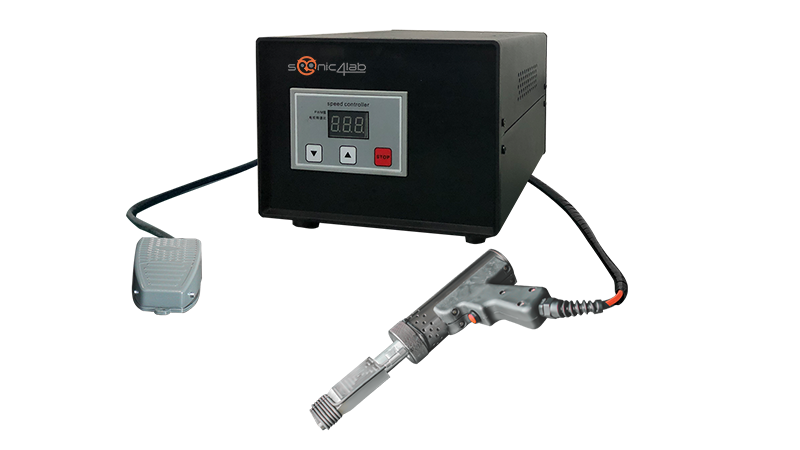
The working principle of the sensor component may seem complex, but it is actually simple and efficient. When the soldering iron is activated, the heating core starts to heat up, and the temperature of the soldering iron head gradually increases. At this time, the temperature measurement element captures the temperature changes in real time and converts them into recognizable electrical signals, which are transmitted through the transmission module to the control unit. The control unit compares the difference between the preset temperature and the actual detected temperature and automatically adjusts the power supply of the heating core – when the temperature is lower than the preset value, the power supply is increased to accelerate heating; when the temperature is higher than the preset value, the power supply is reduced or cut off to stop heating, thereby achieving stable control of the soldering iron head temperature and avoiding overheating oxidation or insufficient temperature-induced false soldering and cold soldering problems.
High-quality sensor components not only improve the temperature control accuracy of the soldering iron but also extend its service life and ensure the safety of soldering. In precise electronic soldering, even a few degrees Celsius of temperature difference may damage sensitive components. The sensor component can control the temperature error within a reasonable range, ensuring the consistency of soldering quality. At the same time, through real-time temperature feedback, it can avoid the long-term overload operation of the heating core, reduce component wear and tear; when the soldering iron is idle at high temperatures, it can trigger an automatic sleep function to reduce energy consumption and prevent accidental burns.
With the continuous development of electronic technology, the sensor components of soldering irons are also continuously upgraded, evolving from traditional analog sensors to digital sensors, with higher temperature control accuracy, faster response speed, and additional functions such as temperature data recording and fault self-diagnosis. Whether it is the industrial-grade soldering stations used by professional practitioners or the portable soldering irons commonly used by electronic enthusiasts, the sensor components are working silently, serving as the “intelligent bridge” connecting electrical energy and heat energy, and laying a solid foundation for the stable operation of various electronic devices.
If you want to purchase equipment, please click here.
