
Precision welding of semiconductor manufacturing equipment
Precision welding of semiconductor manufacturing equipment
In the precision chain of semiconductor manufacturing, the soldering iron, as an indispensable core device, supports the efficient advancement of key processes such as chip packaging and component interconnection with its precise temperature control and flexible operation. From traditional mechanical temperature control to intelligent temperature control, the upgrade trajectory of the soldering iron reflects the progress of semiconductor manufacturing towards refinement and high quality.
The core function of the soldering iron is to convert electrical energy into heat energy, melting solder through precise temperature control to achieve a reliable connection between semiconductor components and the substrate. Its working accuracy directly determines the yield and stability of semiconductor products. In semiconductor manufacturing scenarios, soldering irons must meet stringent process requirements, especially in chip-level packaging and microelectromechanical system component soldering, where extremely high precision in temperature control is required. Temperature fluctuations must be controlled within ±1/±1 degree Celsius to avoid damage to sensitive components due to overheating or defects such as cold solder joints due to insufficient temperature.
As semiconductor technology develops towards miniaturization and high density, the soldering iron has also undergone an iterative upgrade from traditional to intelligent. Early mechanical temperature-controlled soldering irons relied on the thermal expansion and contraction of bimetallic strips for temperature control, resulting in limited accuracy. They have been gradually replaced by intelligent temperature-controlled models. Today’s semiconductorspecific soldering irons incorporate digital PID algorithms and embedded microcontrollers, equipped with high-precision temperature sensors that sample over 100 times per second, achieving millisecond-level dynamic temperature control. Combined with nano-coated soldering tips, they significantly improve corrosion resistance and lifespan, adapting to environmentally friendly processes such as lead-free soldering.
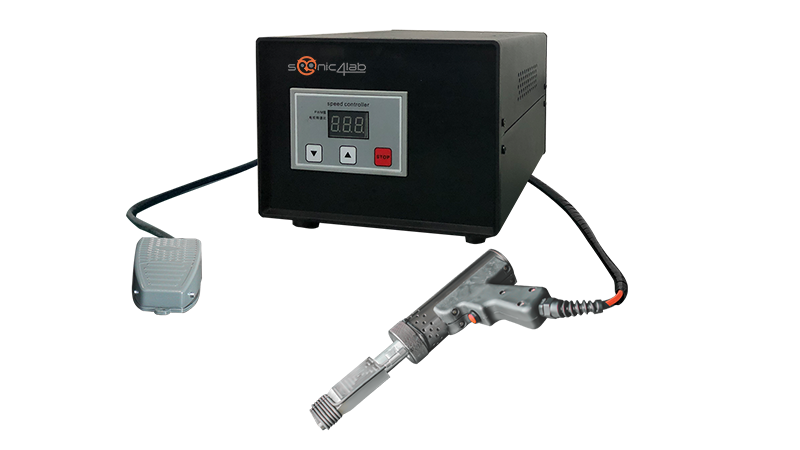
In practical applications, the adaptability and proper operation of the soldering iron are crucial. For different specifications of semiconductor devices, soldering irons with corresponding power and tip shapes must be selected. Power is typically controlled between 25-60W, using fine-tipped or horseshoe-shaped tips to meet the soldering requirements of micron-level pads. During soldering, operators must strictly control the heating time and temperature, usually within 2-3 seconds, to minimize the impact of heat on sensitive internal structures of the device. Simultaneously, electrostatic discharge protection must be implemented to prevent ESD damage to the chip.
As a key device in semiconductor manufacturing that offers cost control and flexible operation, the soldering iron is not only suitable for auxiliary soldering scenarios in large-scale production, but also plays an irreplaceable role in sample debugging, small-batch production, and onsite repair. Its technological upgrades are deeply intertwined with semiconductor manufacturing processes. With the development of advanced packaging technologies such as Chiplet, the demand for ultra-precision soldering irons continues to rise, becoming a small yet crucial force driving the high-quality development of the semiconductor industry, silently supporting the iteration of electronic devices towards greater precision and reliability.
If you want to purchase equipment, please click here.
