
Ultrasonic Flat Indium Coating Machine
Ultrasonic Flat Indium Coating Machine – Cheersonic
In industrial fields such as optoelectronic displays, semiconductor sputtering targets, precision hardware, and new energy and new materials, the precision, stability, and automation adaptability of indium coating on flat workpieces directly determine the product’s electrical conductivity, thermal conductivity, and bonding performance. Traditional flat indium coating equipment has fixed parameters and poor adaptability, resulting in inaccurate temperature control, uneven coating, and inability to integrate with automated production lines, making it difficult to meet the production needs of various types of high-precision flat workpieces. Shanghai Hanling has specifically developed an ultrasonic flat indium coating machine, equipped with a complete set of adjustable, customizable, and integrated parameter configurations. Based on mature ultrasonic physical coating technology, it is specially designed for various flat workpieces such as copper plates, glass, ceramics, and flat sputtering targets, making it a dedicated indium coating equipment suitable for precision mass production and intelligent production line upgrades.
The equipment features a wide-range adjustable rated power of 12-70W, adapting to diverse production needs in various scenarios. The low-power setting is ideal for gentle indium coating of ultra-thin precision flat sheets and miniature precision components, avoiding damage to the substrate from excessive power. The high-power setting provides ample power for stable coating of large, high-hardness flat workpieces, ensuring full melting and spreading of the indium. Wide-range power adjustment allows the equipment to handle both precision prototyping and industrial mass production, offering exceptional versatility and adaptability to processing standards for flat workpieces of different materials and sizes.
The equipment offers flexible and diverse frequency configurations, with standard options of 28kHz, 40kHz, and 60kHz, and also supports customized frequencies. Different frequencies correspond to different coating precision and workloads; 20kHz is suitable for rapid mass production of large flat surfaces, while 28kHz and 40kHz are suitable for high-precision ultra-thin coating processing. The advantages of multiple frequency options and customization completely break the limitations of fixed frequencies in traditional equipment, allowing for precise parameter matching based on customer workpiece characteristics, coating thickness, and process requirements, comprehensively improving the accuracy and processing quality of flat indium coatings.
The equipment is equipped with a wide-range, precise temperature control system (150-400℃), ensuring uniform temperature control with minimal error, adapting to various indium melting standards and planar substrate processing requirements. The low-temperature range is suitable for precision planar materials that are not heat-resistant, preventing high-temperature deformation and performance degradation; the high-temperature range enables rapid melting and tight adhesion of indium, meeting the requirements for high-adhesion indium coating. Full-process temperature control effectively avoids problems such as coating peeling and uneven thickness caused by localized temperature unevenness, ensuring consistent and uniform indium coating quality for each batch of workpieces.
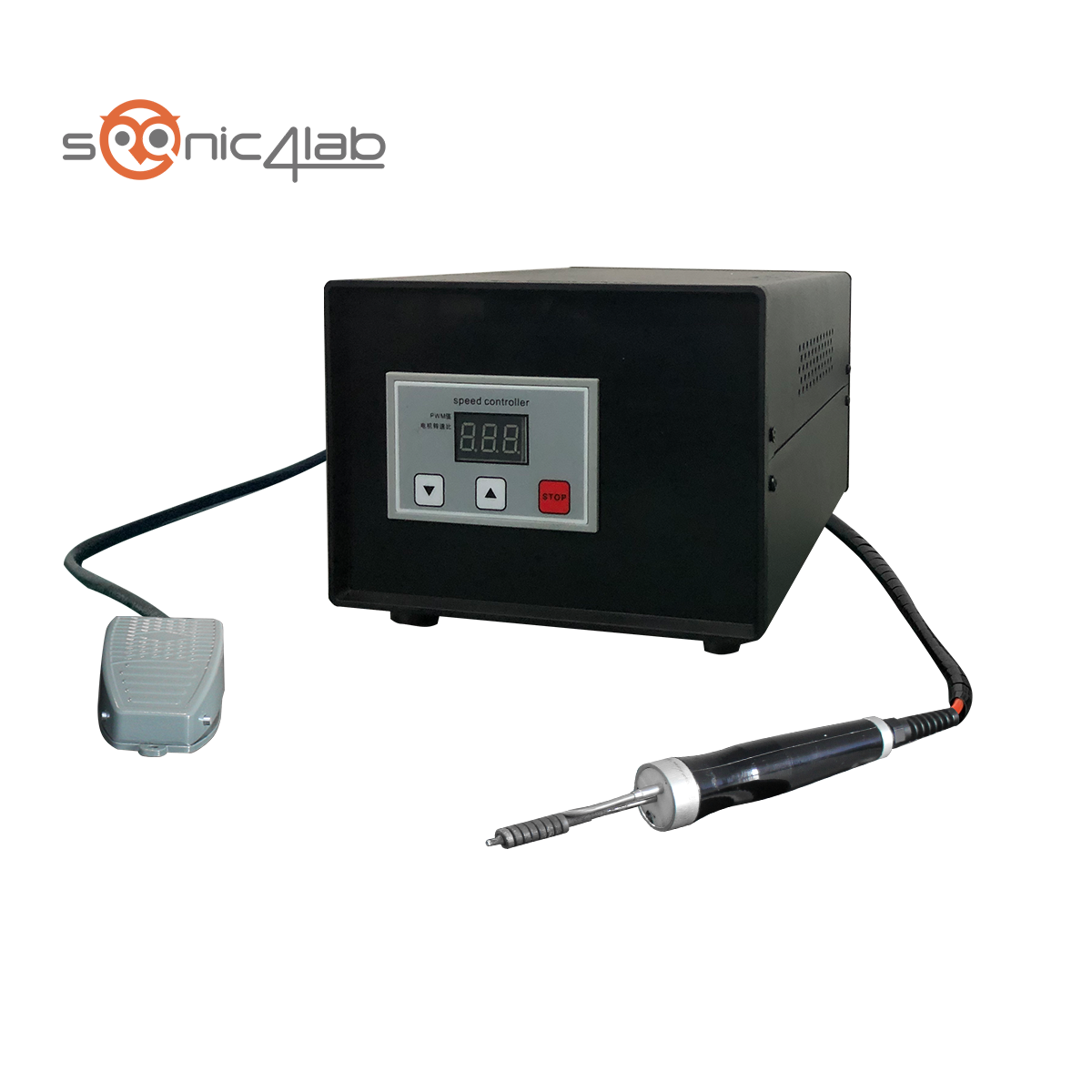
At the core precision level, the equipment supports 3-20μm micron-level amplitude adjustment, precisely controlling the coating’s fineness and adhesion. Small amplitude enables ultra-thin, uniform, and ripple-free precision coating, meeting the stringent process requirements of high-end precision planar components; large amplitude enhances indium penetration and adhesion, improving coating density and durability. Micron-level precise control ensures flawless, seamless planar workpieces, perfectly solving the industry pain points of uneven coating and poor adhesion in traditional planar indium coating.
The equipment adopts a standard industrial voltage of 220V±10%, 40/60Hz, 4A, suitable for the power supply environments of most factories and workshops in China. It requires no circuit modification or dedicated power distribution equipment, making installation simple and plug-and-play, significantly reducing deployment costs and maintenance complexity. It also features a dual-mode operation, allowing for seamless switching between intermittent and continuous operation. The continuous mode is suitable for mass production of standardized flat workpieces, ensuring stable operation and increased capacity. The intermittent mode is suitable for new product prototyping and small-batch customized processing, flexibly adapting to the entire process from R&D to trial production and mass production.
Unlike ordinary indium coating equipment, this machine supports I/O or 485 communication control, enabling seamless integration into automated production lines. The equipment can interface with a PLC control system, achieving remote parameter adjustment, automated program operation, and real-time data transmission. This eliminates manual operation, meeting the production needs of unmanned factories and intelligent production lines, significantly improving the level of production intelligence, reducing manual intervention costs, and facilitating the intelligent upgrading of enterprise production lines.
Overall, the Shanghai Hanling Ultrasonic Flat Indium Coating Machine, with its wide power range, multi-frequency customization, precise temperature control, micron-level accuracy, dual operating modes, and automated integration capabilities, is suitable for indium coating processing of various precision flat workpieces. Combining flexibility, precision, and intelligence, it is the preferred equipment for modern precision manufacturing industries to improve quality, reduce costs, increase efficiency, and upgrade to intelligent manufacturing.
If you want to purchase equipment, please click here.
