
Ultrasonic Soldering Iron for Preparation of Active Ceramic Sensors
Ultrasonic Soldering Iron for Preparation of Active Ceramic Sensors – Ultrasonic Soldering – Sonic4Lab
With the rapid development of sensor technology, active ceramic sensors occupy an important position in industrial testing, medical equipment, intelligent terminals and other fields due to their excellent electromechanical conversion performance. The breakthrough of this technology cannot be achieved without the innovative application of ultrasonic soldering iron in the connection process of piezoelectric materials. This new type of welding tool successfully solves the connection problems of various piezoelectric materials such as barium titanate and ferrite bismuth lanthanum gallium silicate through the synergistic effect of ultrasonic vibration and heat, providing core support for the large-scale production of high-performance active ceramic sensors.
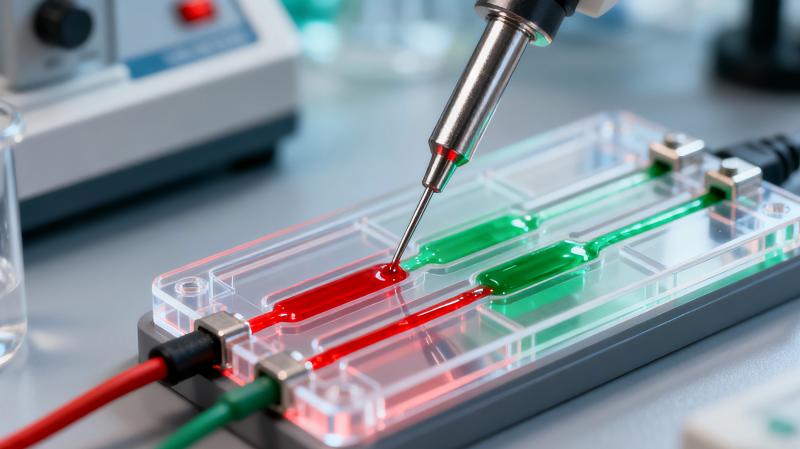
The core advantage of ultrasonic soldering iron lies in its unique energy transfer method. Unlike traditional soldering irons that rely solely on thermal conduction for welding, it converts high-frequency electrical energy into mechanical vibration through a transducer while heating the heating element. The vibration frequency is usually between 20kHz and 40kHz. This micro vibration can effectively destroy the oxide layer and pollutants on the surface of the material, allowing the molecules at the welding interface to fully contact, while reducing thermal damage to the piezoelectric material during the welding process. The piezoelectric properties of piezoelectric materials are extremely sensitive to temperature, and excessively high temperatures can cause damage to their crystal structure. Ultrasonic soldering irons can control the temperature of the welding area within a lower range while ensuring connection strength, making them an ideal tool for connecting piezoelectric materials.
Barium titanate, as the earliest piezoelectric ceramic material to achieve industrial application, has the characteristics of low cost and high dielectric constant, and is widely used in the field of civilian sensors. However, the surface of barium titanate is prone to forming a dense oxide film, and traditional welding methods are difficult to achieve effective connections. When using an ultrasonic soldering iron to connect barium titanate, the surface oxide layer is quickly removed through high-frequency vibration, forming a strong metal bond between the solder and the ceramic surface. After testing, the piezoelectric conversion efficiency of the barium titanate sensor connected by this process is improved by more than 15% compared to traditional processes. It performs particularly well in humidity and pressure sensors and can maintain stable detection performance in harsh environments.
Ferrite bismuth lanthanum gallium silicate is a new type of multi-component piezoelectric material, which has excellent temperature stability and anti-aging performance, and is suitable for the preparation of sensors in high temperature environment. However, its complex composition results in low surface activity of the material, making welding extremely difficult. Ultrasonic soldering iron achieves effective infiltration of solder and material surface without damaging the internal crystal structure of the material through precise control of vibration energy and heating temperature. The high-temperature pressure sensor made by this connection process can work continuously for more than 5000 hours in a high-temperature environment of 200 ℃, with an error controlled within ± 0.5%. It has been successfully applied in the exhaust gas detection system of aircraft engines.
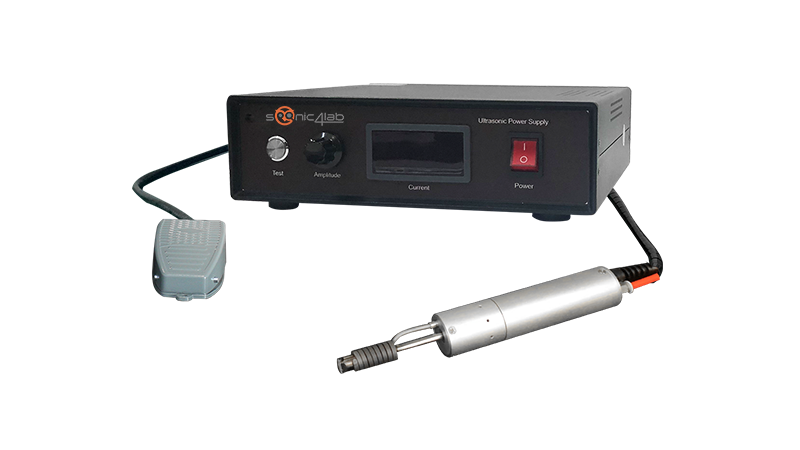
Lead scandium tantalate and lead zirconate titanate (PZT) are representatives of high-performance piezoelectric materials, with extremely high piezoelectric constants and electromechanical coupling coefficients, and are the core materials for high-precision sensors. However, these two materials have high brittleness, and the mechanical and thermal stresses during traditional welding processes can easily lead to material cracking. The low-frequency micro vibration characteristics of ultrasonic soldering iron can significantly reduce stress concentration during the welding process, and its local heating method can avoid the overall temperature rise of the material. In the preparation of PZT ultrasonic sensors, the components connected by ultrasonic soldering iron have a resonance frequency stability that is 30% higher than traditional processes. In medical ultrasound diagnostic equipment, it can provide clearer imaging effects.
In addition to the advantages of material connection, ultrasonic soldering iron has also promoted the intelligent development of the preparation process of active ceramic sensors. By combining with the automatic control system, precise control of welding parameters can be achieved, and vibration frequencies, heating temperatures, and welding times can be pre-set according to the characteristics of different piezoelectric materials, effectively improving production efficiency and product consistency. In mass production, the defect rate of the production line using this process can be controlled below 0.3%, far lower than the traditional process’s 2%, significantly reducing production costs.
With the continuous innovation of piezoelectric material technology, the application scenarios of ultrasonic soldering irons are also constantly expanding. In the future, by optimizing the design of vibration systems and heating modules, it will be able to adapt to the connection needs of more new piezoelectric materials, providing stronger technical support for the application of active ceramic sensors in fields such as the Internet of Things and new energy. This technological innovation that deeply integrates welding processes with material characteristics not only promotes the development of the sensor industry, but also provides valuable experience for process upgrades in the field of precision manufacturing.
If you want to purchase equipment, please click here.
