
Ultrasonic Soldering Iron for Silicon-based Sensors
Ultrasonic soldering iron for silicon-based sensors: a new breakthrough in heterogeneous connection and deflection measurement
In the research and development of microelectromechanical system sensors, the core position of silicon as a sensitive material is increasingly prominent, and its reliable connection with heterogeneous materials such as metals and ceramics directly determines the measurement accuracy and service life of the sensor. Ultrasonic soldering iron, with the synergistic advantages of “high-frequency vibration+precise temperature control”, has broken through the bottleneck of traditional connection technology, achieved efficient and stable combination of silicon and heterogeneous materials, and opened up a new path for deflection measurement applications of strain and pressure sensors.
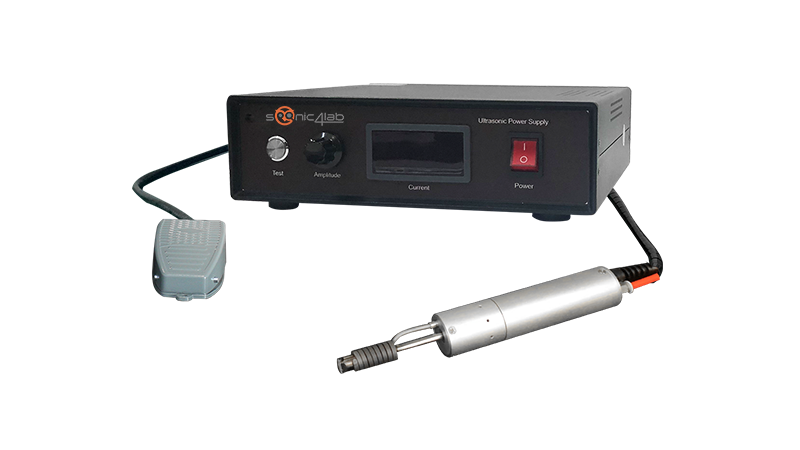
The connection mechanism of ultrasonic soldering iron originates from the composite transfer of energy. The high-frequency vibration of around 60KHz generated by its internal piezoelectric transducer can induce cavitation effect at the connection interface, instantly peeling off the oxide layer and pollutants on the surface of silicon, metal, and ceramic, exposing the fresh substrate. At the same time, the soldering iron tip can accurately control temperature within the range of 150 ℃ -500 ℃, and with a maximum power output of 15W, it can ensure that the solder is fully melted and wetted, while avoiding damage to the crystal structure of silicon caused by high temperature. This “physical cleaning+low-temperature connection” mode fundamentally solves the problem of high contact resistance between silicon and metal and insufficient bonding strength with ceramics.
The optimization of silicon metal connections focuses on the balance between electrical properties and mechanical stability. During the connection process, ultrasonic vibration promotes the interface diffusion between metal atoms and silicon atoms, forming low barrier silicide transition layers such as nickel silicon and platinum silicon, resulting in a specific contact resistivity as low as 10 Ω· cm ². To prevent interdiffusion between metal and silicon, an ultra-thin titanium nitride barrier layer can be introduced at the interface to ensure conductivity and enhance high-temperature stability. This connection method forms a solid whole between the silicon sensitive element and the metal elastic substrate, and the small strain energy of the metal substrate is transmitted to the silicon wafer without loss, providing accurate mechanical response basis for deflection measurement.
The connection between silicon and ceramics is achieved through interface modification. After the silicon coating is prepared on the ceramic surface by the sol gel method, the vibration energy of the ultrasonic electric soldering iron can promote the formation of a stable silicon oxygen chemical bond between the silicon coating and the ceramic substrate, and at the same time enable the silicon coating to achieve homogeneous fusion with the silicon sensor. This connection structure not only has a bonding strength exceeding the fracture strength of the ceramic itself, but also retains the high-temperature and corrosion-resistant characteristics of the ceramic, making it perfectly suitable for pressure sensor applications in high-temperature environments, such as deflection monitoring of aircraft engine components.
The advantages of this connection technology are particularly prominent in strain sensors. After the silicon sensitive component is connected to the metal cantilever beam through an ultrasonic soldering iron, when the cantilever beam is subjected to external force and deflects, the silicon wafer undergoes elastic deformation, and its resistivity will change linearly due to the piezoresistive effect. Due to the absence of gaps and additional stress in the connection interface, the corresponding relationship between deflection and resistance change is highly linear, and the measurement error can be controlled within 0.1%. In the health monitoring of large structures such as bridges and robotic arms, such sensors can capture small deflection signals in real time, providing data support for structural safety assessment.
The deflection measurement application of pressure sensors relies on the reliable connection between silicon diaphragms and ceramic shells. After the silicon membrane is combined with the ceramic base through ultrasonic technology, the deflection of the membrane under pressure will change the capacitance value between it and the ceramic electrode. Thanks to the airtightness and stability of the connection interface, the sensor can achieve continuous measurement in the pressure range of 0-10MPa, and still maintain good repeatability in high and low temperature cycling environments. This characteristic makes it indispensable for pressure deflection correlation measurement in fields such as hydraulic systems and aerospace.
Compared to traditional welding and bonding techniques, ultrasonic soldering iron connections do not require soldering flux, avoiding interface contamination; Low temperature technology reduces material thermal stress and extends sensor life; Its repeatable process parameter control is more suitable for large-scale production. With the development of microsensors towards miniaturization and high precision, this heterogeneous connection technology will further promote the application upgrade of silicon-based sensors in the field of deflection measurement, providing more reliable sensing solutions for industrial detection, aerospace and other fields.
If you want to purchase equipment, please click here.
