
Ultrasonic Soldering Iron Process for Welding Glass Components
Ultrasonic Soldering Iron Process for Welding Glass Components – Sonic4Lab
Glass, as a typical hard and brittle non-metallic material, is difficult to weld reliably using traditional methods. However, ultrasonic soldering irons, with their synergistic effect of cavitation and controllable heat output, provide a feasible path for welding thin and thick composite glass components. This paper addresses the splicing requirements of four glass components in two sizes: 20mm×10mm (1mm+0.1mm) and 20mm×8mm (1mm+0.1mm). It constructs a complete welding implementation plan from aspects such as process principle, preliminary preparation, parameter control, practical procedures, and quality assurance.
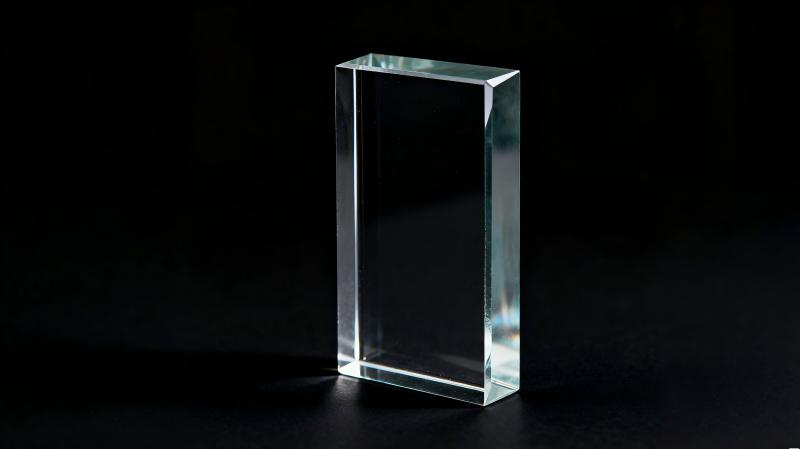
The core principle of ultrasonic glass welding lies in using the cavitation effect generated by high-frequency vibration to break the oxide film on the material surface. Simultaneously, a special solder chemically reacts with the oxide layer on the glass surface, and appropriate heat is used to achieve interface fusion. Compared to traditional adhesive methods, this process does not require chemical media, avoids the risk of aging and degradation, and the welded joint has higher mechanical strength and sealing performance. For the combination of 0.1mm ultra-thin glass and 1mm conventional glass involved in this case, it is crucial to control the vibration energy and heat output to prevent the ultra-thin glass from cracking due to stress concentration. Preliminary preparation is fundamental to ensuring welding quality, mainly encompassing three stages: material pretreatment, tooling fixation, and equipment debugging. For material pretreatment, ultrasonic cleaning technology is used to remove oil, dust, and glass debris from the surfaces of the four glass components. A neutral solvent is used in the cleaning solution to avoid corroding the glass surface. After cleaning, the components are dried in a constant temperature environment of 60℃ for 30 minutes to ensure no moisture residue remains at the interface; otherwise, it will affect the solder wetting effect. To address the differences in glass component thickness, the edges of the 0.1mm ultra-thin glass need to be chamfered to reduce stress concentration points during welding.
Tooling fixation requires a combination of vacuum adsorption and flexible pressing to create a positioning fixture that matches the specifications of the glass components. A silicone buffer layer is then laid on the surface of the fixture. First, fix two 1mm thick glass pieces onto the reference surface of the fixture. Then, precisely align and place a 0.1mm ultrathin glass piece, ensuring the misalignment of the upper and lower glass edges does not exceed 0.1mm. When splicing four glass pieces, a 0.2mm welding gap must be reserved for solder filling. Simultaneously, the overall flatness of the four glass pieces should be controlled within 0.05mm by fine-tuning the fixture. During equipment debugging, an active solder suitable for glass welding must be selected. Its composition should include metal elements that readily react with the glass oxide layer (SiO₂) to ensure stable chemical bonding.
Precise control of process parameters is crucial for successful welding and must be tailored to the differences in glass thickness. The ultrasonic frequency should be selected in the 20-40kHz range. This frequency range generates sufficient cavitation to break the oxide film while avoiding high-frequency vibration that could damage the ultrathin glass. The amplitude should be controlled between 5-10μm, using the lower limit amplitude for the 0.1mm ultrathin glass side and appropriately increasing it for the 1mm thick glass side. Regarding welding temperature, a combined preheating and ultrasonic method is employed. The preheating temperature is set at 80-100℃, below the solder melting temperature. During welding, the soldering iron tip temperature is controlled at 280-320℃. Ultrasonic vibration ensures the solder wets and spreads at a temperature 10-40℃ below the conventional melting temperature.

Welding pressure and time need to be controlled in stages. The welding pressure for a single glass component (thin + thick) is set at 0.1-0.2 MPa to avoid excessive pressure that could cause the ultra-thin glass to crack. The welding time for a single weld seam is 3-5 seconds to ensure the solder fully fills the gaps without excessive heat accumulation. When splicing four glass components, a “assemble first, then assemble” sequence is adopted: first, complete the interlayer welding of two sets of 20mm×10mm and 20mm×8mm glass components, then splice and weld the two sets along the 20mm side, extending the welding time at the splice point to 5-8 seconds to ensure overall connection strength. During the welding process, the soldering iron tip must move at a uniform speed along the weld seam, controlled at 5-8 mm/s, to ensure even solder spread.
After welding, rigorous quality inspection and post-processing are required. For visual inspection, the weld seam is observed under a high-powered microscope, requiring a uniform and continuous weld seam, free of cracks, bubbles, and solder residue, with no obvious deformation of the glass components. Mechanical performance testing uses a shear strength test, requiring the welded joint to have a shear strength of no less than 5 MPa to ensure it meets usage requirements. For sealing testing, a water immersion test is conducted, immersing the welded product in water for 24 hours, observing for any moisture ingress. In the post-processing stage, excess solder at the weld seam edges is precisely cleaned, and ultrasonic-assisted grinding is used to avoid damage to the glass caused by mechanical grinding.
In summary, the core of using an ultrasonic soldering iron to weld glass components of this specification lies in precisely controlling and balancing vibration energy and heat output, combined with scientific tooling fixation and process design, to achieve reliable splicing of four glass components. This process requires no flux and has the advantages of being clean, efficient, and producing high joint strength, which can meet the welding requirements of precision glass components. At the same time, through strict quality control, it can effectively avoid common problems such as the cracking of ultra-thin glass and weak welds.
If you want to purchase equipment, please click here.

