
Ultrasonic Soldering of AlN Ceramics
Ultrasonic Soldering of AlN Ceramics: A Precision Connection Solution for High-End Manufacturing
Driven by the wave of intelligentization and informatization, high-end fields such as aerospace, military defense, and semiconductors are placing increasingly stringent demands on electronic devices. Miniaturization, functional integration, and high power density have become core development directions. The resulting high heat flux density and heat dissipation challenges directly determine the reliability and lifespan of equipment—data shows that for every 10°C increase in electronic device temperature, the effective lifespan decreases by 30% to 50%. Against this backdrop, aluminum nitride ceramics, with their excellent high thermal conductivity, good insulation, and thermal expansion coefficient matching that of chips, have become a core material for high-end packaging substrates. Ultrasonic welding technology, with its unique advantages, has become a key path to overcome the bottlenecks of traditional processes in achieving reliable connections between aluminum nitride ceramics and metals.
Traditional welding processes have long faced numerous difficulties in connecting aluminum nitride ceramics. Due to the stable surface properties of aluminum nitride ceramics, the solder wettability is extremely poor, and there is a significant difference in the thermal expansion coefficient between aluminum nitride ceramics and commonly used metals. This easily leads to huge internal stress after welding, causing defects such as ceramic cracking and joint delamination. Conventional brazing requires high-temperature processes, often exceeding the melting point of the metal substrate, which damages material properties. The use of flux leaves impurities, increasing thermal resistance and affecting connection reliability. These problems severely restrict the application of aluminum nitride ceramics in high-end fields, necessitating a connection technology that combines low temperature, no residue, and high strength.
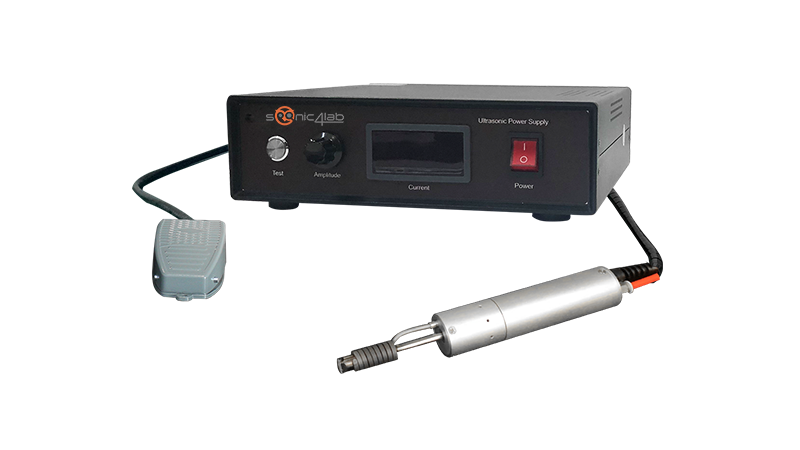
The emergence of ultrasonic welding technology provides a completely new solution for joining aluminum nitride ceramics. Its core principle is to generate a cavitation effect in the molten solder through high-frequency ultrasonic vibration of 20-60kHz, mechanically destroying the oxide film at the welding interface while promoting solder flow and wetting. Unlike traditional welding, ultrasonic welding does not require flux and can be performed in a vacuum or inert atmosphere, fundamentally avoiding impurity residue. Furthermore, the welding temperature is typically controlled below 450℃, far lower than the 800℃ or above of traditional brazing, effectively reducing thermal stress damage to the material. For the inert surface of aluminum nitride ceramics, adding active elements such as titanium and indium to the solder can form a stable metallurgical bonding layer during the welding process, significantly improving joint strength and thermal conductivity.
The core advantages of ultrasonic welding of aluminum nitride ceramics are reflected in three dimensions. First, superior joint quality. The interface cleaning effect brought about by cavitation allows the void ratio of the welded joint to be controlled below 5%, and in some high-end applications, even below 3% can be achieved with precise control. Thermal conductivity is significantly improved—experimental data shows that the thermal diffusivity of the joint using the optimized process can reach 65.941 m²/s, ensuring efficient heat dissipation. Second, stronger process compatibility. Its low-temperature characteristics allow it to be matched with various metal substrates such as aluminum and copper, avoiding high-temperature deformation of the substrate; the flux-free design meets the stringent cleanliness requirements of semiconductors, vacuum equipment, and other applications. Third, enhanced reliability. Through the chemical reaction between active elements and the ceramic surface to form a metallurgical bond, combined with reasonable process parameters, the joint shear strength can stably reach over 20 MPa, capable of withstanding thousands of thermal cycle tests, meeting the long-term service requirements of high-end equipment.
Achieving high-quality ultrasonic welding requires precise control of three key process points. First, surface pretreatment is crucial. Diamond grinding is used to achieve a ceramic welding surface roughness below 1.2μm, followed by ultrasonic cleaning in an alkaline solution at 60-80℃ for 15-20 minutes to thoroughly remove oil and contaminants. Second, solder system optimization is essential. Composite solders containing active elements such as titanium and indium must be selected based on the application scenario to achieve a balance between wettability and stress buffering. For example, solders with added indium can significantly improve joint flexibility and alleviate thermal expansion mismatch issues. Finally, parameter coordination and control are vital. Ultrasonic power, welding temperature, and holding time must be precisely matched to avoid excessive power causing ceramic breakage or insufficient temperature affecting solder wetting.
Currently, ultrasonic welding technology for aluminum nitride ceramics has been widely applied in several high-end fields. In semiconductor manufacturing, it is used to prepare aluminum nitride ceramic heating plates, achieving a highly hermetic connection between the main body and the guide tube, with leakage rate controlled below 1×10⁻¹⁰ mbar·L/s, meeting the precision process requirements of atomic layer deposition and other similar processes. In the aerospace field, it is used in the manufacture of power device packaging substrates, ensuring heat dissipation stability under extreme environments. In the new energy vehicle field, it contributes to the miniaturization and high reliability upgrade of automotive electronic modules. With continuous process optimization, this technology is developing towards automation and high precision, achieving real-time monitoring and traceability of welding quality through integration with intelligent detection technology.
As a key connection technology in high-end manufacturing, ultrasonic welding of aluminum nitride ceramics not only breaks through the technical bottlenecks of traditional processes but also meets the development needs of modern electronic devices for high reliability and miniaturization. In the future, with the research and development of new active solders and the improvement of process systems, this technology will achieve breakthroughs in more high-end scenarios, providing core support for the upgrading of the precision manufacturing industry and promoting the improvement of my country’s technological competitiveness in key fields such as aerospace and semiconductors.
If you want to purchase equipment, please click here.

