
Ultrasonic Soldering Protects Solar Module Quality
Ultrasonic Soldering Protects Solar Module Quality – Sonic4lab
In the global energy transition, solar energy, as a core force of clean and renewable energy, relies heavily on the precision of its module manufacturing process to determine industry competitiveness. Among these tools, ultrasonic soldering irons, as key manufacturing tools, play an irreplaceable role in the precision connection process of photovoltaic modules due to their unique technological advantages. They are crucial for ensuring module reliability and improving power generation efficiency, profoundly impacting the long-term performance and market acceptance of photovoltaic products.
The stable operation of solar modules depends on the precise connection of their core components, especially in precision areas such as the connection between cells and busbars, and the internal parts of junction boxes, where the requirements for connection quality are extremely stringent. Traditional soldering tools are prone to high-temperature damage, incomplete soldering, and oxidation, which not only reduce the conductivity of the modules but may also lead to desoldering and aging in long-term outdoor environments, significantly shortening their lifespan and affecting the stability of power generation efficiency. Ultrasonic soldering irons, by combining high-frequency ultrasonic vibration energy with precision temperature control technology, fundamentally solve the pain points of traditional soldering.
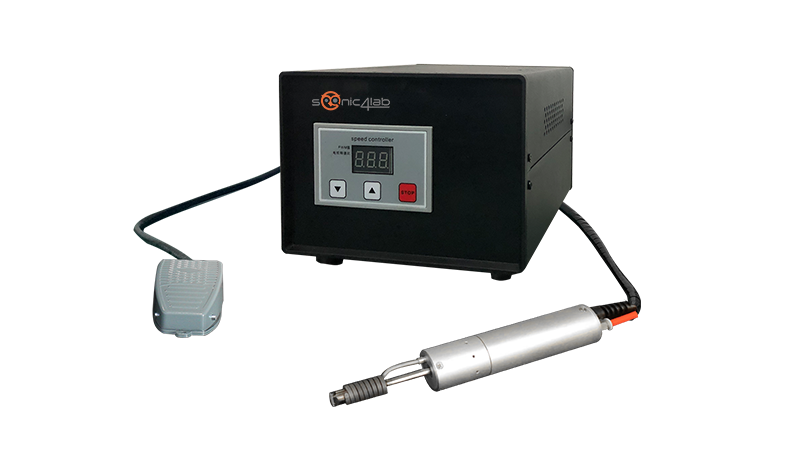
The advantages of their unique working principle make them irreplaceable in precision connection processes. Ultrasonic soldering irons do not rely on chemical flux. They remove the oxide film from the soldering surface through mechanical energy generated by high-frequency vibration, while precise temperature control ensures the solder melts fully, achieving a perfect weld with no porosity and low stress. This avoids thermal damage to sensitive components such as solar cells and enhances the conductivity and strength of the connection. In the connection between solar cells and busbars, it can precisely adapt to the fine connection interface, ensuring smooth current transmission, reducing contact losses, and directly improving the power generation efficiency of the module. In welding inside junction boxes, its compact and flexible design can adapt to complex internal structures, ensuring wiring stability and avoiding power loss or safety hazards caused by poor contact.
As the photovoltaic industry upgrades towards higher efficiency and thinner designs, the requirements for precision welding in module manufacturing are constantly increasing, highlighting the importance of ultrasonic soldering irons. It not only improves welding yield and reduces production losses but also adapts to new module structures such as all-aluminum back surface areas, helping modules achieve cost reduction and efficiency improvement, further enhancing the market competitiveness of photovoltaic products. In large-scale production, ultrasonic soldering irons enable automated integration, balancing production efficiency with soldering consistency, providing strong support for the large-scale, high-quality development of the photovoltaic industry.
As a key tool in solar energy manufacturing, the application level of ultrasonic soldering irons directly impacts the quality of photovoltaic industry development. With its irreplaceable precision connection capabilities, it safeguards the long-term reliability and power generation efficiency of modules, driving photovoltaic products towards greater efficiency, durability, and competitiveness. Against the backdrop of energy transition, with continuous technological optimization, ultrasonic soldering irons will continue to empower the solar energy manufacturing industry, injecting lasting momentum into the development of global green energy.
If you want to purchase equipment, please click here.
