
Precision manufacturing tools for fuel cell machines
In today’s rapid development of the new energy industry, fuel cells, as efficient and clean energy carriers, are ushering in unprecedented development opportunities. Ultrasonic fuel cell welding machines, with their unique technical advantages, have become indispensable key equipment in the precision manufacturing of fuel cells.
The core of ultrasonic welding technology lies in the use of energy generated by high-frequency mechanical vibration (usually 15-70kHz) to cause plastic deformation, local temperature rise and diffusion connections of the material at the welding interface under pressure, and finally form a strong metallurgical bond. Compared with traditional laser welding and resistance welding, it does not require filling materials and does not produce high-temperature heat-affected zones, which perfectly meets the stringent requirements of core components such as fuel cell plates and membrane electrode assemblies for welding accuracy and tightness.
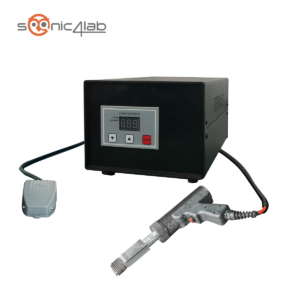
In fuel cell bipolar plate welding, ultrasonic welding machines can achieve micron-level welding accuracy, ensure that the runner structure is not damaged, and ensure the airtightness of the weld, effectively reducing the risk of hydrogen leakage. For the frame welding of membrane electrode components, the non-contact energy transfer method can avoid damage to the fragile proton exchange membrane, significantly improving the overall performance and service life of the battery.
In addition, ultrasonic welding machines are also highly efficient and environmentally friendly. The welding time of a single weld can be controlled within 0.1-1 seconds, which greatly improves production efficiency; There is no smoke and exhaust gas generation during the welding process, which is in line with the green development concept of the new energy industry. With the acceleration of fuel cell industrialization, ultrasonic welding technology is developing in the direction of intelligence and modularity, further improving the stability and automation level of equipment through the integration of visual positioning, force feedback control and other functions.
It can be said that ultrasonic fuel cell welding machines not only promote the upgrading of fuel cell manufacturing processes, but also lay a solid technical foundation for the large-scale development of the new energy industry, and become an important bridge connecting laboratory innovation and industrial production.