
Advantages of Ultrasonic Indium Coating Machines
Advantages of Ultrasonic Indium Coating Machines – Sonic4lab
In high-end manufacturing industries such as semiconductors, optoelectronic displays, new materials, and precision hardware, traditional flux-coated indium coating processes have long suffered from numerous pain points, including quality defects, environmental pressure, material waste, low efficiency, and material limitations, severely restricting product quality upgrades and innovative development. Sonic4lab, deeply rooted in precision ultrasonic welding technology, has independently developed a new generation of ultrasonic indium coating machines. Abandoning the drawbacks of traditional welding processes, and leveraging seven core technological advantages, it achieves a revolutionary upgrade in indium coating processes, providing an efficient, environmentally friendly, high-quality, and low-cost integrated solution for indium coating of various precision workpieces.
The core advantage of the equipment is that it requires no flux throughout the entire process, eliminating hidden welding defects at the source. Traditional indium coating welding relies on flux for shaping, and flux residue is a major cause of later product failure. Residual flux can form microbubbles within the weld layer. While these bubbles don’t immediately affect the product’s appearance, they expand over time due to prolonged equipment operation, temperature fluctuations, and environmental oxidation, gradually leading to irreversible welding defects such as weld cracking, peeling, and poor contact. Simultaneously, residual flux causes continuous, progressive corrosion in the welded area, significantly shortening the lifespan of precision components. This equipment utilizes a purely physical ultrasonic vibration welding principle, requiring no flux additives, completely eliminating the risks of bubbles, corrosion, and cracks, and significantly improving product stability and durability.
This equipment offers a lightweight, green, and environmentally friendly welding solution, effectively reducing the environmental maintenance burden on enterprises. Traditional flux welding processes release large amounts of harmful gases and generate polluted wastewater containing chemical residues. Enterprises must equip themselves with specialized exhaust gas and wastewater treatment equipment, increasing equipment procurement and maintenance costs and subjecting themselves to stringent environmental audits. In contrast, the ultrasonic indium coating machine uses no flux or chemical additives, producing zero harmful gas emissions and zero industrial wastewater throughout the entire process. It requires no additional environmental treatment facilities, resulting in a clean and low-carbon production process that fully complies with modern green production standards. In terms of processing quality, the equipment achieves a high standard of coating that is firm, stable, uniform, and flawless. Utilizing precise and controllable high-frequency ultrasonic vibration technology, molten indium can deeply adhere to and penetrate the workpiece substrate, resulting in a coating with extremely strong adhesion. It is resistant to peeling, flaking, and detachment under heat, stress, and long-term use, exhibiting anti-aging and wear resistance far exceeding traditional processes. Simultaneously, the equipment automates and balances material, speed, and vibration control, ensuring a complete processing coverage without blind spots, ripples, or uneven thickness. The coating is smooth and uniform, perfectly meeting the quality requirements of high-precision workpieces and significantly improving product yield.
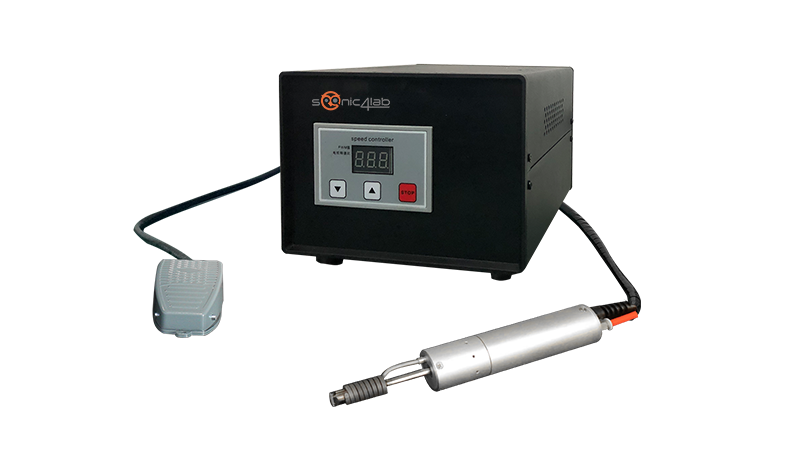
Precise thickness control effectively reduces production costs and saves on precious metal consumables. Indium is a scarce and expensive precious metal. Traditional processes cannot accurately control coating thickness, often resulting in over-coating and significant material waste. This equipment, with its superior precision, can accurately and stably control the indium coating thickness within 0.02mm, applying the required amount of material and minimizing indium loss, thus reducing raw material procurement costs at the source. Furthermore, the stable processing quality reduces defective products and further compresses overall production expenses.
The highly efficient automated operation mode significantly improves enterprise mass production efficiency. The equipment is equipped with a standardized ultrasonic vibration operation program, adaptable to the rapid processing of various workpiece specifications, offering outstanding advantages in mass production. Large 1500*190mm copper plates can complete indium coating in just 15 minutes with two vibrations, while small 50*50mm ITO glass can be formed in just 1 minute with three vibrations. Simultaneously, the fluxless process eliminates the cumbersome post-weld cleaning, residue removal, and drying procedures of traditional welding, simplifying the production process, shortening the production cycle, and effectively increasing the overall capacity of the production line.
Most importantly, the equipment’s superior material adaptability helps enterprises overcome process barriers and develop new products. Traditional flux welding cannot achieve bonding of difficult-to-weld materials such as glass, ceramics, and aluminum; composite welding of dissimilar materials is a significant industry challenge, greatly limiting product innovation. This equipment, relying on ultrasonic physical bonding technology, can easily achieve indium coating on various difficult-to-weld substrates, while also supporting welding of dissimilar materials such as aluminum-copper, copper-glass, and aluminum-ceramics. This helps enterprises develop new composite materials and high-end products, enrich their product portfolio, and seize market opportunities.
In summary, the Sonic4lab ultrasonic indium coating machine integrates multiple advantages such as defect-free operation, environmental friendliness, high quality, material saving, high efficiency, and innovation, completely solving the pain points of traditional indium coating processes. It is the core preferred equipment for the high-end precision manufacturing industry to improve quality, reduce costs, and innovate.
If you want to purchase equipment, please click here.
