
stress sensor is used for measurement
Stress Sensor Is Used For Measurement – Sonic4lab
Stress sensors, as the core components for accurately capturing stress changes, are widely used in multiple fields such as mechanical manufacturing and civil engineering. Their measurement accuracy directly affects the safety of engineering structures and the reliability of data. During the installation, commissioning and maintenance measurement process of stress sensors, soldering irons, as key auxiliary tools, play a crucial role in circuit soldering and contact handling. The standardized use of soldering irons is the foundation for ensuring the smooth progress of measurement work.
The core of stress sensor measurement is to convert mechanical signals into collectible electrical signals by sensing the deformation of components under force, and this process cannot do without stable line connections. The main function of an electric soldering iron is to achieve reliable soldering between the sensor leads and the measurement circuit, avoiding problems such as signal distortion and data fluctuations caused by poor contact. During the measurement preparation stage, the soldering iron needs to be preheated first. The temperature should be adjusted according to the soldering requirements, usually controlled at about 60℃ higher than the melting point of the solder. If the temperature is too high, it is easy to damage the sensor leads and solder joints. If it is too low, a firm soldering joint cannot be formed.
Standardized welding operations are the prerequisite for the measurement accuracy of stress sensors. Before welding, the sensor leads and terminal blocks should be sanded with sandpaper to remove the surface oxide layer. Then, the terminals should be pretinned with an electric soldering iron to enhance the conductivity and firmness of the welding. When soldering, hold the soldering iron at an Angle of about 45 degrees. First, touch the tip of the soldering iron with the terminal to heat it up. Once the terminal temperature reaches the melting point of the solder, bring the solder wire close to the solder joint. After the solder evenly covers the terminal and the lead wire, quickly remove the soldering iron and let the solder cool and solidify naturally to avoid external force touching, which may cause the solder joint to fall off or result in a false solder.
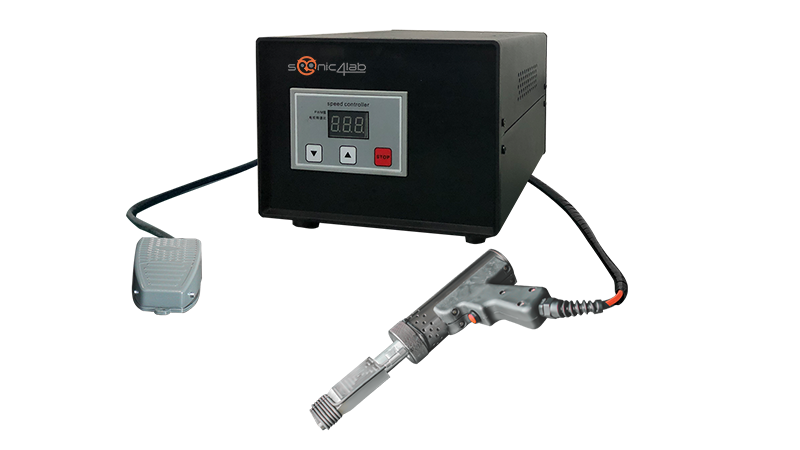
During the measurement process of stress sensors, the rational use of soldering irons can also effectively solve circuit faults. If signal interruption or abnormal data occurs during the measurement process, it is very likely caused by loose or oxidized solder joints. At this time, an electric soldering iron can be used to reheat the solder joints, resolder the solder, and at the same time clean up the oxidized debris around the solder joints to restore the good conduction of the circuit. In addition, after the soldering is completed, an electric soldering iron should be used to remove the excess solder to prevent short circuits between the solder joints, which may affect the normal operation of the sensor.
It should be noted that when using an electric soldering iron, protective measures should be taken to avoid burns from high temperatures. At the same time, keep the operating environment clean and away from flammable items. After the measurement is completed, the power of the soldering iron should be turned off in time. Let it cool down and then store it properly. The precise measurement of stress sensors is not only a test of measurement technology but also a requirement for the standardization of the use of auxiliary tools.
In conclusion, soldering irons are indispensable in the measurement work of stress sensors. Proper use of soldering irons and proper soldering operations can effectively ensure the stability of circuit connections and reduce measurement errors. Only by combining professional measurement methods with standardized tool usage can the measurement advantages of stress sensors be fully leveraged, providing precise and reliable data support for the safe operation of various projects.
If you want to purchase equipment, please click here.
