The ultrasonic soldering machine is operating stably
In industries such as electronics manufacturing, ultrasonic soldering machines, with their advantages of high precision and high efficiency in welding, have become indispensable key equipment on production lines. However, long-term and high-frequency use will cause problems such as performance decline and frequent malfunctions of the equipment, affecting the production progress and product quality. Therefore, mastering the scientific maintenance methods of ultrasonic soldering machines is of vital importance for ensuring the efficient and stable operation of the equipment and extending its service life.
Daily cleaning is the basic work for maintaining ultrasonic soldering machines. The tin slag and flux residue produced during the soldering process will adhere to the soldering nozzle, soldering iron tip and the interior of the equipment. These impurities not only affect the fluidity of the solder and the quality of the solder joints, but also may clog the nozzles and reduce the transmission efficiency of ultrasonic vibrations. After the daily production is completed, a dedicated copper wire brush should be used to clean the oxide layer and tin slag on the surface of the soldering iron tip. A lint-free cloth dipped in alcohol should be used to wipe the outer shell of the equipment and the workbench to keep the working environment clean. Meanwhile, regularly inspect the solder wire feeding channel and remove the residual debris inside to prevent poor feeding from affecting the continuity of the welding.
The maintenance of the core components of ultrasonic soldering machines is related to the performance and service life of the equipment. As a key component for converting electrical energy into ultrasonic vibration, transducers may age or experience performance degradation after long-term operation. A comprehensive inspection of the transducer should be conducted once a month. Use professional instruments to measure its vibration frequency and output power. If the parameters deviate from the standard range, contact the manufacturer in a timely manner for calibration or replacement. In addition, the function of the amplitude transformer is to amplify the amplitude of ultrasonic vibration, and its connection parts need to be checked regularly to see if they are loose. If a gap is found between the amplitude transformer and the transducer or the welding head, it will lead to an increase in vibration energy loss and affect the welding effect. The fixing screws should be tightened immediately and an appropriate amount of thermal grease should be applied to enhance the vibration conduction efficiency.
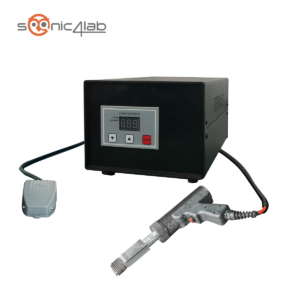
The maintenance of soldering iron tips has a direct impact on the soldering quality. The soldering iron tip is highly prone to oxidation in high-temperature environments. The oxide layer hinders heat transfer, causing the solder to fail to melt fully and resulting in problems such as false soldering and cold soldering. Before and after each use, the soldering iron tip should be wiped on a moist cleaning sponge to remove any residual solder and flux on the surface. If the soldering iron tip has suffered severe oxidation or wear, a dedicated soldering iron tip repair tool can be used to polish it and restore its original shape. At the same time, select the model and temperature of the soldering iron tip reasonably according to the soldering requirements to avoid accelerating the wear of the soldering iron tip due to excessive temperature. Generally, it is advisable to control the soldering temperature at 30-50 ℃ higher than the melting point of the solder.
The maintenance of ultrasonic soldering machines is a systematic and continuous task. From daily cleaning to the maintenance of core components, from hardware calibration to software management, every link cannot be ignored. Only by establishing a scientific and complete maintenance system can we ensure that the ultrasonic soldering machine always maintains the best performance, safeguarding the high-precision and high-quality production in the electronics manufacturing industry and enhancing the core competitiveness of enterprises in the fierce market competition.